Provins - Visit Website

Overview
After nearly nine years of loyal service, the existing platform has been replaced by a new generation of tools, designed to meet current needs and provide long-term support for Provins’ evolving requirements.
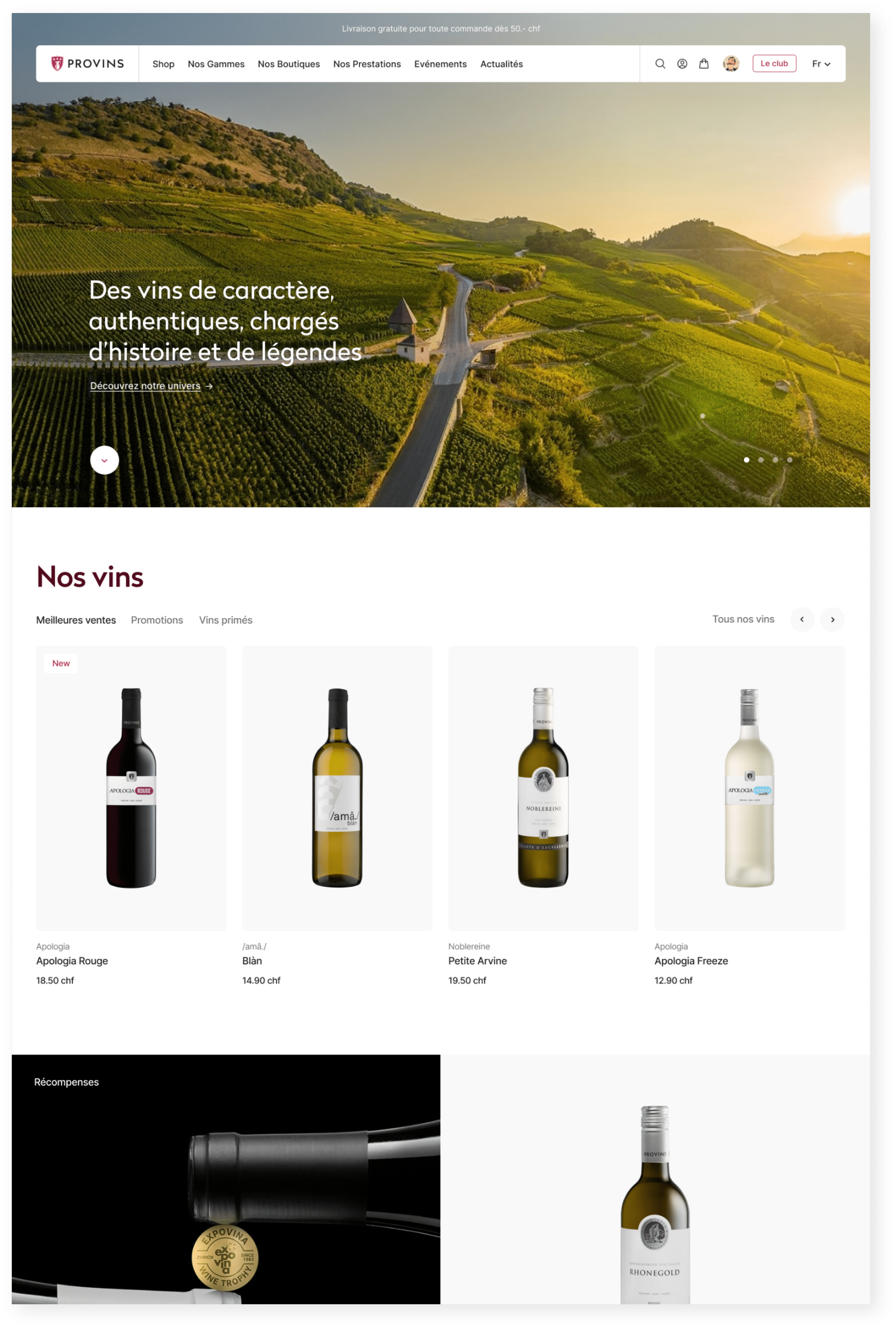
The redesign also involved significant work on the visual design. Several phases of research, exploration and refinement were required to strike the right balance between Provins’ strong brand identity, the showcasing of its products and the demands of a contemporary digital experience. This iterative process, carried out in close collaboration with the client, resulted in a visual direction that was fully endorsed and tailored to the brand’s various personas.
On the content side, the latest version of our CMS has been deployed. Its flexible, modular block system gives Provins’ teams a high degree of autonomy in creating, organising and updating the site’s various sections.
The online shop has also undergone a thorough overhaul with the deployment of the latest generation of PrestaShop. This migration required the reconfiguration of all existing modules, as well as the adaptation of specific developments ensuring two-way data exchange between the online shop and Provins’ ERP system.
Beyond this technological evolution, particular attention was paid to integrating the CMS and e-commerce into a single, coherent digital experience.
| Design | Design system, UI / UX, Figma |
| Front | Vue 2, Nuxt 2, Tailwind |
| Back | AIO V3 Headless |
| Shop | Prestashop |
Challenge
To blur the line between the corporate website and the online shop.
One of the main challenges of the project was to carry out a comprehensive modernisation of the e-commerce platform whilst retaining and further developing the numerous bespoke features developed over the years for Provins.
The migration to the latest version of PrestaShop therefore involved a significant amount of work to port and adapt the existing developments, particularly those relating to data exchanges with the ERP and the client’s business tools.
Among the major developments was also the implementation of a fully-fledged custom labelling system, fully integrated into the ordering process and connected to Provins’ production tools.
The former themed mini-sites have, meanwhile, been redesigned. Their editorial richness and key presentation elements have been retained, but their content is now integrated directly into the CMS in the form of flexible sections that can be easily managed by Provins’ teams.
The project also enabled the platform’s numerous unique sales mechanisms to be retained and enhanced: flash sales, special promotions, product highlights and the integration of the e-commerce offering directly into the heart of the editorial content.
The aim was to break down the traditional barrier between the corporate website and the online shop. A product can thus be discovered and purchased naturally from various sections of the site, without requiring the user to switch between different sections or change their browsing path.
This deep integration extends right through to the front-end: whether viewing editorial content or a shop page, the user navigates a single, consistent, seamless and fully integrated Provins experience.


Mobile
Accessibility across all platforms
The user experience has been carefully designed to adapt to all devices. This means that users can easily view their content regardless of the device they are using. The site’s loading and display performance ensures that content can be viewed smoothly.


Methodology
As close as possible to our customers’ needs
Through an in-depth analysis of the technical and user experience challenges, the teams at iomedia were able to set priority objectives to achieve the result our client was looking for.

Interactivity
Accessibility
Colors
The choice of colours was guided by a number of considerations to ensure optimal harmony and legibility. For this project, we used the colour codes set out in their existing brand guidelines, adapting them for optimal use on digital platforms.
Design system
A library of reusable elements
Creating a library of reusable elements is an essential step in establishing a strong visual identity. By creating consistent design blocks and elements, it is easy to ensure visual cohesion across all media and to make the work of graphic designers and developers easier at every stage of the project.